The Vineyard at Clos ChaVelle Answers to a Winery, Not the HOA
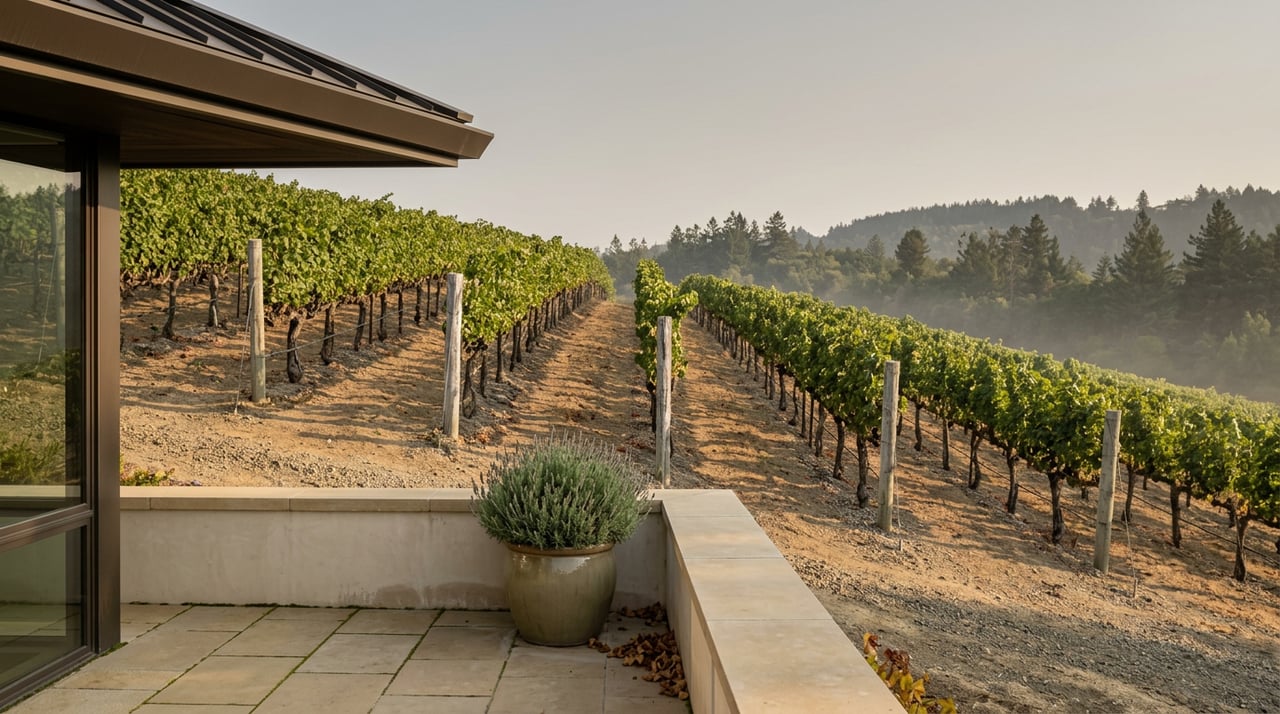
Every listing photo of Clos ChaVelle shows the same thing: rows of vines running downhill toward Lake Chelan, catching the evening light just right. Buyers touring the neighborhood tend to read that scenery the way they'd read a golf course or a community trail system, as an amenity the homeowners association maintains for everyone's benefit. It isn't. The vineyard rows framing those photos belong to a working commercial winery, and that winery runs its own calendar, makes its own decisions about the vines, and answers to nobody's architectural review committee.
That distinction rarely comes up on a first tour. It shows up later, in a due-diligence document most buyers skim past on their way to the CC&Rs.
Clos ChaVelle's own homeowners association describes the community as 67 homesites set among 66 acres of vineyards on the South Shore of Lake Chelan, just off Highway 97A. This isn't a decorative hedge along a driveway or a few rows planted for ambiance near the entry gate. It's a farm operation.
The vines sit at roughly 1,250 to 1,600 feet in elevation on gravelly, sandy soil, inside the Lake Chelan American Viticultural Area established in 2009, a region that has grown to more than 40 wineries and over 300 acres of vines according to the Lake Chelan Wine Valley association. Clos ChaVelle isn't adjacent to that industry. It's inside it.
Ownership matters here because it determines who makes the operational calls. Public descriptions of Rocky Pond Estate Winery identify the Clos ChaVelle Vineyard as one of three estate vineyards in its portfolio, alongside the Double D Vineyard in the Columbia Valley AVA and a newer planting in the Rocky Reach AVA. That means the vines outside a Clos ChaVelle window are part of a multi-site commercial winemaking business with its own production goals, harvest logistics, and long-term vineyard management plan, not a landscaping contract the HOA renews each spring.
Vineyard decisions can involve fruit quality, yield targets, and vine health, rather than what looks best from a homeowner's back patio in September.
This is the part that gets lost in the marketing language about wine-country character. The HOA and the vineyard operator run on parallel tracks, and they don't answer to each other.
| Governed by the HOA | Governed by the vineyard operator |
|---|---|
| Home design, exterior materials, and rooflines | Pruning and canopy management timing |
| Fencing, planting palette on residential lots | Spray scheduling and product choice |
| Architectural style (Mediterranean, Tuscan, modern ranch) | Harvest timing, crew size, equipment routes |
| Short-term rental permissions layered on county rules | Whether a given block gets replanted or pulled |
A buyer can read every page of the CC&Rs, understand the design review process cover to cover, and still have no visibility into how the vineyard itself is run. Those are two separate governing bodies operating on the same acreage, and only one of them is a homeowners association you can attend meetings for.
The vines aren't landscaping. They're a farm with a farm's decision-making structure, sitting inside a neighborhood with a neighborhood's decision-making structure.
This isn't a hidden trapdoor. It's already flagged, just easy to skip past. Buyer guidance for the neighborhood lists building envelope and view corridor review as its own line item, separate from HOA covenants and dues, and specifically instructs buyers to note any vineyard operations or farm agreements that affect their parcel.
Most buyers request the CC&Rs, the budget, and the reserve study. Fewer ask whether there's a recorded farm agreement covering the tract next to their lot, what it permits, and how long it runs.
If a specific lot backs up to or overlooks a vineyard block, these are worth confirming before you're under contract, not after:
None of these questions are unusual for a property backing onto working agricultural land anywhere in Washington wine country. They're just easy to forget when the vineyard reads as scenery instead of business.
None of this makes Clos ChaVelle a harder place to live. It makes it a specific kind of place to live, and buyers do better when they understand which kind before closing rather than after.
Being inside the Lake Chelan AVA next to an operating estate vineyard is part of what gives the neighborhood its identity and, for many buyers, its appeal. A vineyard tied to an actual production winery has more permanence and character than turf a landscaping crew mows on a schedule. The trade-off is control. A homeowner who wants certainty that a specific view will look exactly the same in ten years is asking a question the HOA can't fully answer, because part of that view belongs to someone else's business plan.
That's a different risk profile than a waterfront lot or a golf course frontage, where the amenity operator's obligations are usually spelled out in a single, well-understood agreement most buyers already know to ask about. At Clos ChaVelle, ask whether a recorded farm agreement applies to the parcel and where to find it.
Does the HOA have any authority over how the vineyard is farmed? No. The HOA's design review and covenant enforcement apply to residential lots and common areas. Vineyard operations, if governed by an agreement, are addressed separately from the HOA's residential rules.
Could the vines near a specific lot be pulled or replanted? That depends on whether an agreement covers that tract and, if so, its terms, which is why confirming its existence and scope before purchase matters more than reading the view from the listing photos.
Who should a buyer contact with vineyard-specific questions? Start with the Clos ChaVelle Homeowners Association for community-side documentation, then ask your agent to help identify the recorded farm agreement or easement tied to the specific parcel you're considering.
The view sold you on Clos ChaVelle. Reviewing the recorded documents can help clarify what protections, if any, apply to that view. If you're comparing this neighborhood against other Lake Chelan communities and want help reading what's actually recorded against a specific lot before you tour it, reach out to Jessie Simmons for local guidance built around how you actually plan to live here.
This article is general information, not legal, tax or financial advice. Consult a qualified professional about your situation.
Stay up to date on the latest real estate trends.
Real Estate